Introduction
Antigua and Barbuda, often referred to as the heart of the Caribbean sailing scene, offers a maritime experience unlike any other. With 365 distinct beaches and a constant cooling influence from the Atlantic trade winds, the twin-island nation is a primary destination for seasoned sailors and luxury charter enthusiasts alike. However, the success of a voyage in these waters depends heavily on preparation. Understanding What Should You Bring on a Sailing Trip in Antigua? is not merely about packing a suitcase; it is about curated selection based on the specific environmental variables of the Leeward Islands. Industry trends show a shift toward ‘light and sustainable’ travel, where high-performance technical gear replaces traditional heavy luggage. In this guide, we provide an authoritative analysis of the essentials required to navigate the Antiguan coastline with comfort, safety, and style.
Understanding the Antiguan Maritime Environment
Before diving into your packing list, it is vital to understand the climate. Antigua experiences a tropical maritime climate. The trade winds, known as the ‘Alizés,’ blow consistently from the northeast or east, providing a steady 15 to 25 knots of breeze during the peak sailing season from December to May. While this makes for world-class sailing, it also means that the sun’s intensity is masked by the wind, leading to rapid dehydration and sunburn if one is not prepared. Humidity levels typically hover around 70-80%, which influences how fabrics dry and how electronics perform in the salt-laden air.
Essential Luggage: The Soft-Sided Rule
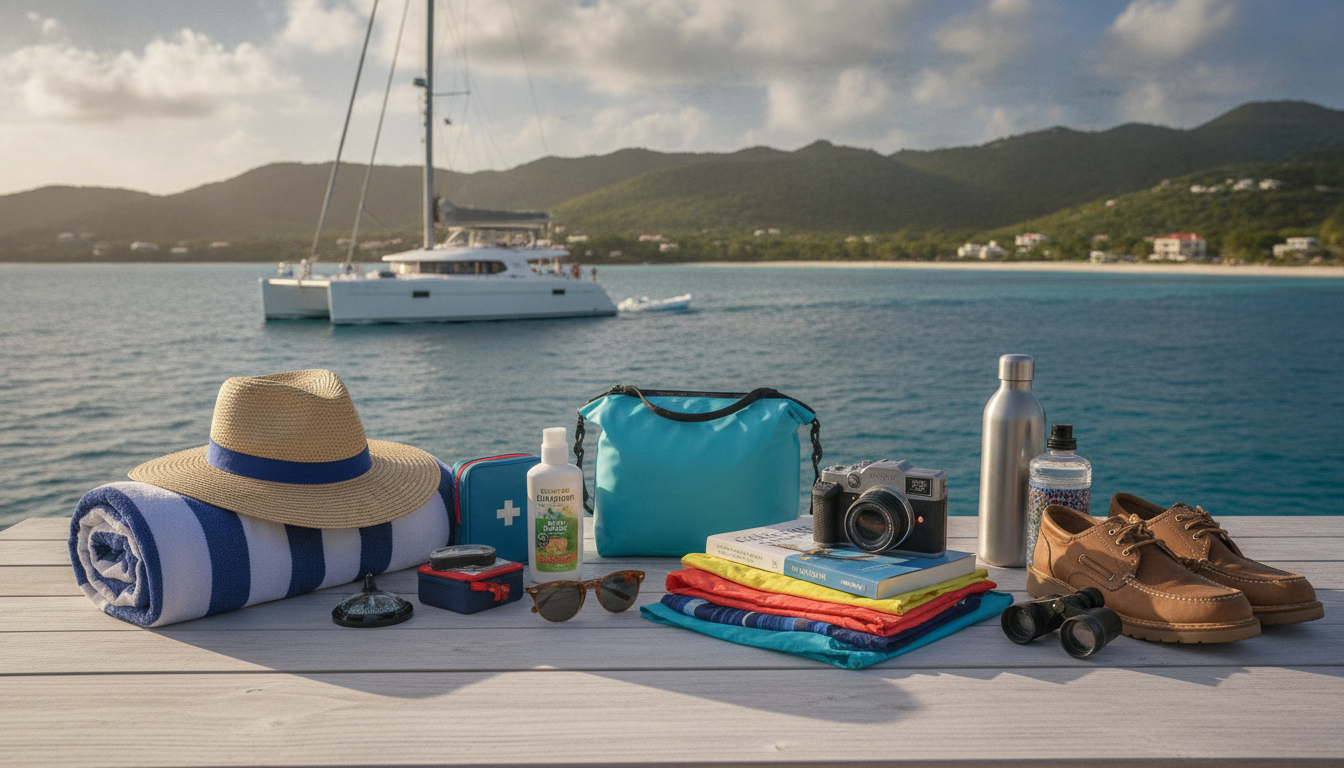
The first rule of packing for a yacht is the abandonment of hard-shell suitcases. Space on a sailing vessel, even on a spacious catamaran, is optimized for movement and structural integrity rather than storage of bulky items. Hard suitcases are nearly impossible to stow in cabin lockers and can damage the expensive woodwork or gelcoat of the interior. Instead, opt for high-quality, soft-sided duffel bags or collapsible ‘weekender’ bags. These can be folded flat and tucked away once you have unpacked your gear into the onboard cabinetry. Waterproof dry bags are also essential for shore excursions, protecting your camera and documents from spray during dinghy rides to spots like Green Island or the Pillars of Hercules.
Clothing and Apparel: The Layering Strategy
When considering what should you bring on a sailing trip in Antigua, think in layers. The daytime temperature is consistently warm, but the combination of wind and moisture can lead to a chill during night passages or evening dinners on deck.
Daytime Sailing Gear
For time spent on deck, prioritize UPF (Ultraviolet Protection Factor) clothing. Modern technical shirts with a UPF 50+ rating are superior to cotton because they wick moisture away from the skin and dry almost instantly. Look for long-sleeved performance shirts that provide maximum coverage without causing overheating. Lightweight, quick-dry shorts or ‘board shorts’ are the standard for both men and women. Avoid heavy denim or thick canvas, which becomes heavy and uncomfortable when wet.
Evening and Shore Attire
Antigua has a rich naval history, and the social scene at Nelson’s Dockyard or English Harbour can range from casual beach bars to upscale dining. A ‘smart casual’ approach is best. Men should pack lightweight linen trousers and short-sleeved button-down shirts. Women will find breathable sundresses or kaftans to be the most versatile options. While the vibe is relaxed, some high-end resorts and restaurants in Antigua do have a dress code that prohibits swimwear during dinner service.
Footwear for Deck and Dock
Footwear is a critical safety consideration. Onboard, the rule is usually ‘barefoot or boat shoes.’ If you prefer to wear shoes on deck, they must have non-marking, siped rubber soles to provide grip on wet surfaces without leaving scuff marks on the deck. Flip-flops are essential for beach landings but offer zero support for walking the historic trails of Shirley Heights. Therefore, a pair of hybrid water shoes or sturdy walking sandals with a back strap is highly recommended for those planning to explore the island’s interior or volcanic rock formations.
Sun Protection and Skin Care
The Antiguan sun is exceptionally strong due to its proximity to the equator. Standard sunscreens are often insufficient and can be harmful to the delicate coral reefs surrounding the island. When packing, ensure your sunscreen is ‘reef-safe,’ meaning it is free of oxybenzone and octinoxate. Zinc-based mineral sunscreens are the gold standard for sailors. Furthermore, a wide-brimmed hat is non-negotiable; however, it must have a chin strap or ‘hat clip’ to prevent it from being lost to the trade winds. Polarized sunglasses are another necessity, as they cut the glare on the water, allowing you to see the changing depths and coral heads—a vital skill for navigating the shallow waters of North Sound.
Health, Safety, and Medical Essentials
While most professional charters, such as Salt-n-Sun Charter, provide comprehensive safety equipment, personal medical needs should be addressed individually. Motion sickness is a common concern even for experienced sailors. Consult with a professional regarding scopolamine patches or ginger-based supplements. A personal first-aid kit should include antiseptic wipes, waterproof bandages, and a high-quality after-sun lotion with aloe vera. Hydration is equally important; bringing a reusable, insulated water bottle helps reduce plastic waste and ensures your water stays cold in the tropical heat.
Electronics and Connectivity
Antigua operates on a mix of 110V and 230V, and the plug types can vary between American-style two-pin and British-style three-pin. Most modern yachts are equipped with inverters and USB charging ports, but a universal travel adapter is a wise inclusion. Given the salt-heavy environment, protective waterproof cases (like those from LifeProof or Pelican) for smartphones and tablets are essential. If you plan on capturing the underwater beauty of Cades Reef, a waterproof action camera is a must-have item.
Documentation and Currency
Ensure your passport has at least six months of validity remaining. You will also need your sailing certifications if you are doing a bareboat charter. While the Eastern Caribbean Dollar (XCD) is the local currency, US Dollars are widely accepted across Antigua. However, having local currency is beneficial for small purchases at local markets or in rural areas. Notify your bank of your travel plans to avoid flagged transactions while abroad.
Comprehensive Packing Checklist
The following table summarizes the essential items you should prioritize for your Antiguan sailing adventure.
| Category | Item | Reason for Inclusion |
|---|---|---|
| Luggage | Soft-Sided Duffel | Fits easily into yacht storage lockers. |
| Clothing | UPF 50+ Long Sleeve | Protects against intense UV rays and wind. |
| Footwear | Non-Marking Deck Shoes | Provides grip and prevents deck damage. |
| Protection | Reef-Safe Sunscreen | Protects skin and preserves coral ecosystems. |
| Accessories | Polarized Sunglasses | Reduces water glare for better navigation. |
| Health | Sea-Sickness Medication | Ensures comfort during Atlantic swells. |
| Utility | Waterproof Dry Bag | Keeps electronics dry during dinghy transfers. |
Frequently Asked Questions
What is the best time of year to sail in Antigua?
The peak season is from December to May, known as the dry season. This period offers the most consistent trade winds and the lowest chance of rainfall, making it ideal for sailing. The Antigua Sailing Week in late April is a world-renowned event that marks the end of the peak season.
Do I need a wet suit for snorkeling in Antigua?
Generally, no. The water temperature in Antigua stays between 78°F and 82°F (25°C to 28°C) year-round. However, a thin ‘rash guard’ is recommended to protect against sun exposure and occasional jellyfish stings while snorkeling.
Can I bring a drone to film my sailing trip?
Yes, but you must follow local regulations. Antigua requires drone operators to register their equipment and adhere to strict no-fly zones, especially near the V.C. Bird International Airport and certain government buildings. Always check with your charter captain before launching from the deck.
Is there Wi-Fi available on the boat?
Most luxury charters provide onboard Wi-Fi via cellular data networks. However, signal strength can be intermittent when anchored in remote bays or during long passages between islands like Barbuda. Purchasing a local SIM card is a cost-effective way to stay connected.
What should I pack for a trip to Barbuda?
Barbuda is much more remote than Antigua. If your itinerary includes a stop at the Low Bay or the Frigate Bird Sanctuary, pack extra supplies of sunscreen, water, and snacks, as there are fewer commercial facilities on the island compared to the main island of Antigua.
Conclusion
Preparation is the hallmark of a successful maritime expedition. By focusing on high-quality, functional gear and respecting the unique environmental conditions of the Caribbean, you ensure that your focus remains on the breathtaking scenery and the joy of the sail. Remember that space is a premium, and the sun is your most persistent companion. Packing light, packing smart, and choosing the right partners, like those at Salt-n-Sun Charter, will transform your Antiguan voyage from a simple holiday into a masterclass in island exploration. Whether you are navigating the historic waters of English Harbour or the untouched sands of Barbuda, having the right gear ensures you are ready for every horizon.


