
Introduction
The global boat charter industry has experienced a significant paradigm shift over the last decade. Once perceived as an exclusive luxury reserved for the ultra-wealthy, private maritime travel has become increasingly accessible to a broader demographic of travelers seeking bespoke, socially distanced, and experiential vacations. According to recent maritime industry reports, the global yacht charter market is projected to reach a valuation of over $27 billion by 2027, driven by a 5.4% compound annual growth rate. This surge in popularity brings with it a complex array of choices, terminology, and contractual obligations that can be overwhelming for the uninitiated. To ensure a seamless experience on the water, understanding What Questions Should You Ask Before Booking a Boat Charter? is not merely a recommendation—it is a prerequisite for safety, financial transparency, and satisfaction.
As travelers move away from standardized cruise ship itineraries toward the autonomy of private charters, the burden of due diligence shifts to the client. A successful charter depends on the alignment of expectations between the charterer, the broker, and the crew. This article provides a comprehensive, deep-dive analysis into the essential inquiries every prospective sailor should make before signing a contract or committing funds. By mastering these questions, you transition from a passive consumer to an informed navigator of your own luxury experience.
The Vessel: Beyond the Aesthetics
What is the Age and Refit History of the Boat?
In the world of yachting, the year of manufacture is only one part of the story. A 10-year-old vessel that underwent a complete interior and mechanical refit last year may be in superior condition to a five-year-old vessel that has been poorly maintained. When asking What Questions Should You Ask Before Booking a Boat Charter?, always inquire about the ‘Refit Year.’ A refit typically implies upgrades to navigation systems, engine overhauls, and cosmetic updates to the upholstery and cabins. This ensures that you are not paying premium rates for a vessel with outdated safety technology or weary interiors.
What is the Hull Configuration and Stability?
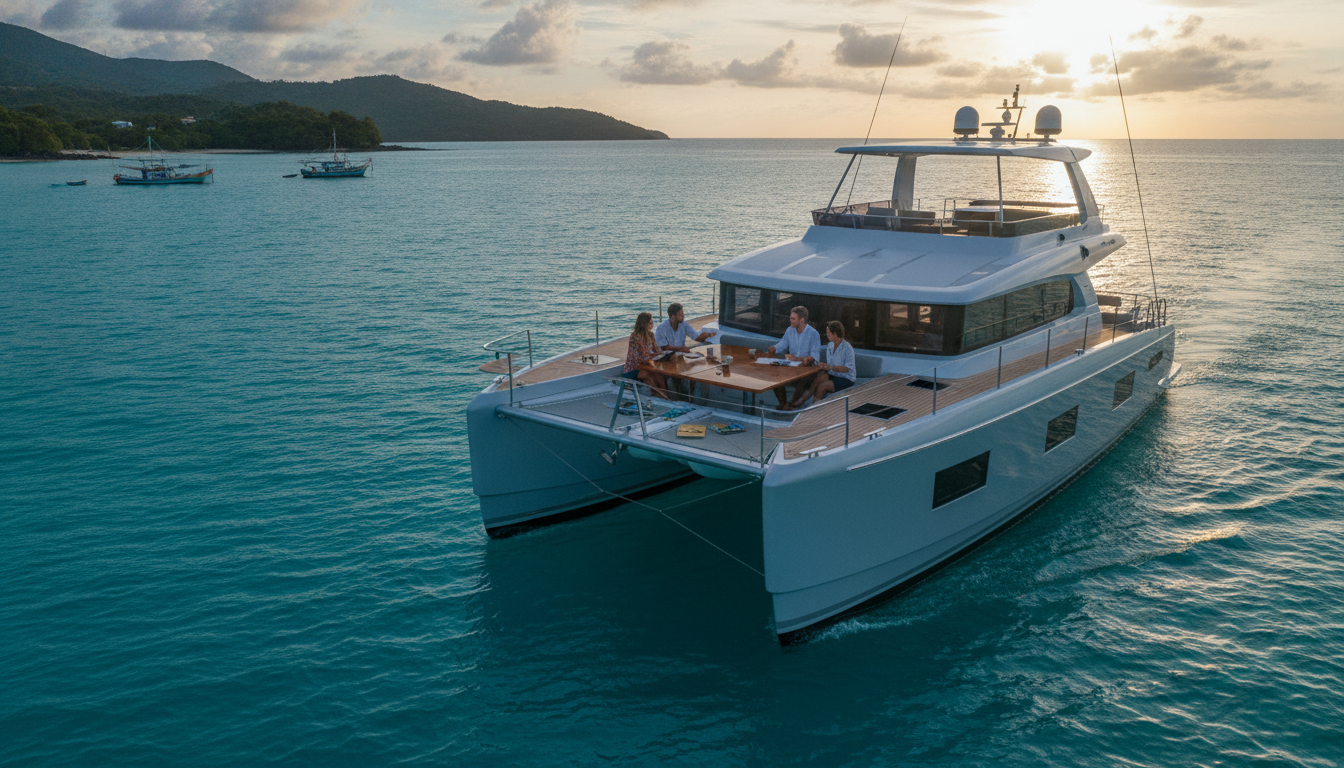
The choice between a monohull and a catamaran significantly impacts the onboard experience. Monohulls offer a classic sailing feel and better performance ‘upwind,’ but they heel (tilt) while sailing. Catamarans provide a stable, level platform with significantly more living space and a shallower draft, allowing access to secluded coves that deeper vessels cannot reach. Furthermore, ask if the vessel is equipped with stabilizers. Zero-speed stabilizers are a game-changer for those prone to seasickness, as they minimize the rolling motion of the boat even while at anchor.
Financial Transparency and Hidden Costs
Is the Charter All-Inclusive or Plus Expenses?
One of the most common points of confusion in the charter industry is the pricing structure. In regions like the Caribbean, many charters are ‘All-Inclusive,’ covering food, standard beverages, and fuel. However, in the Mediterranean and for larger motor yachts globally, the standard is ‘Plus Expenses.’ This usually involves an Advance Provisioning Allowance (APA). The APA is typically 25% to 35% of the base charter fee and is used to cover fuel, food, dockage fees, and communications. You must ask for a detailed breakdown of how the APA is managed and ensure you receive a line-item accounting at the end of the trip.
What are the Taxes and VAT Implications?
Value Added Tax (VAT) varies wildly depending on the country of embarkation and the route taken. For example, a charter starting in France may have different tax rates than one starting in Italy or Greece. Some jurisdictions offer tax reductions if the vessel spends a certain amount of time in international waters. Always ask: ‘Is VAT included in the quoted price?’ Failure to clarify this can lead to an unexpected 10% to 22% increase in your final bill.
The Crew and Service Standards
What are the Crew’s Qualifications and Longevity?
The crew can make or break a charter experience. Ask for a ‘Crew Profile’ before booking. How long has the captain been with this specific vessel? A crew that has worked together for multiple seasons typically offers much smoother service than a group of freelancers thrown together at the last minute. Furthermore, if you have specific interests like scuba diving or gourmet vegan cuisine, ask if the crew includes a certified PADI instructor or a chef with specialized culinary training.
What is the Tipping Protocol?
While tipping is discretionary, it is a standard industry practice. The customary gratuity ranges from 10% to 20% of the base charter fee. Asking about this upfront prevents awkwardness at the end of the journey and allows you to budget accordingly. Professional outfits, such as Salt-n-Sun Charter, provide clear guidance on these industry standards to ensure transparency for their clients.
Logistics, Itinerary, and Safety
What is the Bad Weather and Cancellation Policy?
The sea is unpredictable. You must understand the ‘Force Majeure’ clauses in your contract. If a hurricane or a Mistral wind prevents the boat from leaving the dock, are you entitled to a partial refund, a credit, or a rescheduled date? Many brokers recommend ‘Charterer’s Liability’ and ‘Trip Cancellation’ insurance. Asking about these policies protects your investment against environmental factors beyond anyone’s control.
How Flexible is the Itinerary?
One of the primary draws of a sailing charter is the freedom it affords. However, fuel costs and port reservations can limit that freedom. Ask the captain: ‘How many hours of engine cruising are included per day?’ and ‘Are there specific ports that require booking months in advance?’ A transparent discussion about your ‘must-see’ destinations will help the captain plan a realistic and enjoyable route that balances transit time with relaxation.
Comparison Table: Charter Types
To better understand the options available, refer to the following comparison of the three primary charter structures:
| Feature | Bareboat Charter | Skippered Charter | Fully Crewed Charter |
|---|---|---|---|
| Crew | None (You are the captain) | Captain only | Captain, Chef, Stewards, Deckhands |
| Responsibility | Full (Navigation & Safety) | Navigation (Captain) | Professional Management |
| Provisioning | Self-managed | Self-managed or basic | Professional Chef & Service |
| Privacy | Maximum | High | Professional/Discreet |
| Ideal For | Experienced Sailors | Novice Sailors/Relaxation | Luxury/High-end Service |
Frequently Asked Questions
1. Do I need a license to book a boat charter?
If you are booking a ‘Bareboat’ charter, most jurisdictions require a recognized International Certificate of Competence (ICC) or a specific national sailing license plus a sailing resume. For ‘Skippered’ or ‘Crewed’ charters, no license or previous experience is required from the client.
2. What is the Advance Provisioning Allowance (APA)?
The APA is a deposit paid before the charter to cover operational expenses like fuel, food, and port fees. It is managed by the captain, and any unspent funds are returned to the client in cash or via wire transfer at the end of the voyage.
3. Can I customize the menu on a crewed charter?
Yes. Before your trip, you will be asked to fill out a ‘Preference Sheet.’ This document allows you to detail dietary restrictions, allergies, favorite brands of alcohol, and specific meal requests, which the chef will use to provision the yacht.
4. Are children and pets allowed on board?
Most charters are child-friendly, and crews can often arrange for safety netting around the deck. However, pets are more complicated due to customs regulations and yacht maintenance policies. Always ask the specific boat owner about their pet policy before booking.
5. What happens if the yacht has a mechanical failure?
Standard contracts (like MYBA or CYBA) usually state that if the vessel is disabled for more than 12 to 24 hours, the charterer is entitled to a pro-rata refund or alternative accommodation. Always verify the specific ‘Breakdown Clause’ in your agreement.
Conclusion
Booking a sailing charter is an investment in an unforgettable experience, but it requires a strategic approach to planning. By addressing What Questions Should You Ask Before Booking a Boat Charter? early in the process, you mitigate risks and maximize the value of your holiday. From understanding the technical specifications of the hull to the fine print of the APA and VAT, every detail contributes to the safety and luxury of your journey. Remember that the best charter experiences are built on a foundation of clear communication and professional expertise. Whether you are navigating the turquoise waters of the Exumas or the historic coastlines of the Adriatic, your due diligence ensures that the only thing you have to worry about is the direction of the wind.


