
Introduction
The allure of the open sea has historically been reserved for seasoned mariners and those with the technical prowess to navigate complex rigging and shifting tides. However, the modern nautical industry has undergone a significant transformation. Today, the question of Can Beginners Go on a Sailing Charter? is met with a resounding yes. According to recent industry data, the global yacht charter market is projected to reach over 25 billion dollars by 2028, driven largely by a surge in interest from first-time sailors and luxury travelers seeking bespoke experiences. The democratization of sailing means that you no longer need to know your port from your starboard to enjoy a week-long odyssey on a private yacht. In this comprehensive guide, we will explore the mechanisms that make sailing accessible to novices, the various charter types available, and how beginners can ensure a safe and memorable maritime adventure.
Understanding Sailing Charter Options for Beginners
For a beginner, the concept of a sailing charter can be intimidating. The primary barrier to entry is often the assumption that one must possess a bareboat certification or years of experience. In reality, the charter industry offers several tiers of service designed specifically for those with zero experience. The three main categories are Crewed Charters, Skippered Charters, and Cabin Charters.
The Fully Crewed Charter
A fully crewed charter is the pinnacle of luxury and accessibility. On these vessels, you are a guest rather than a crew member. The yacht comes with a professional captain, a chef, and often additional deckhands or stewards. This option is ideal for beginners who want to focus entirely on relaxation and exploration. The crew handles navigation, sail trimming, mooring, and all culinary requirements. This allows beginners to observe the mechanics of sailing without the pressure of performance.
The Skippered Charter
A skippered charter is perhaps the most popular choice for beginners who want a balance between privacy and professional guidance. You rent the yacht and hire a professional skipper to handle the technical aspects of the journey. Unlike a fully crewed charter, you might still be responsible for provisioning and cooking, but the safety and navigation of the vessel are in expert hands. This is an excellent educational opportunity, as most skippers are happy to teach beginners the basics of steering and line handling.
Cabin Charters
For individuals or couples who are not ready to rent an entire vessel, a cabin charter allows you to book a private cabin on a larger yacht or catamaran. The route is pre-planned, and the crew is provided. This is a cost-effective way for beginners to test their “sea legs” and meet like-minded travelers in a social environment.
Comparison Table: Charter Types for Beginners
To better understand which option suits your needs, consider the following comparison of charter structures:
| Feature | Bareboat Charter | Skippered Charter | Fully Crewed Charter |
|---|---|---|---|
| Experience Required | High (License Needed) | None | None |
| Responsibility | Full Responsibility | Shared/Skipper Managed | Crew Managed |
| Navigation & Safety | Client Responsibility | Professional Skipper | Professional Crew |
| Cost Level | Moderate | Moderate to High | Premium |
| Best For | Expert Sailors | Families & Learning | Luxury & Relaxation |
Why Catamarans are the Beginner’s Choice
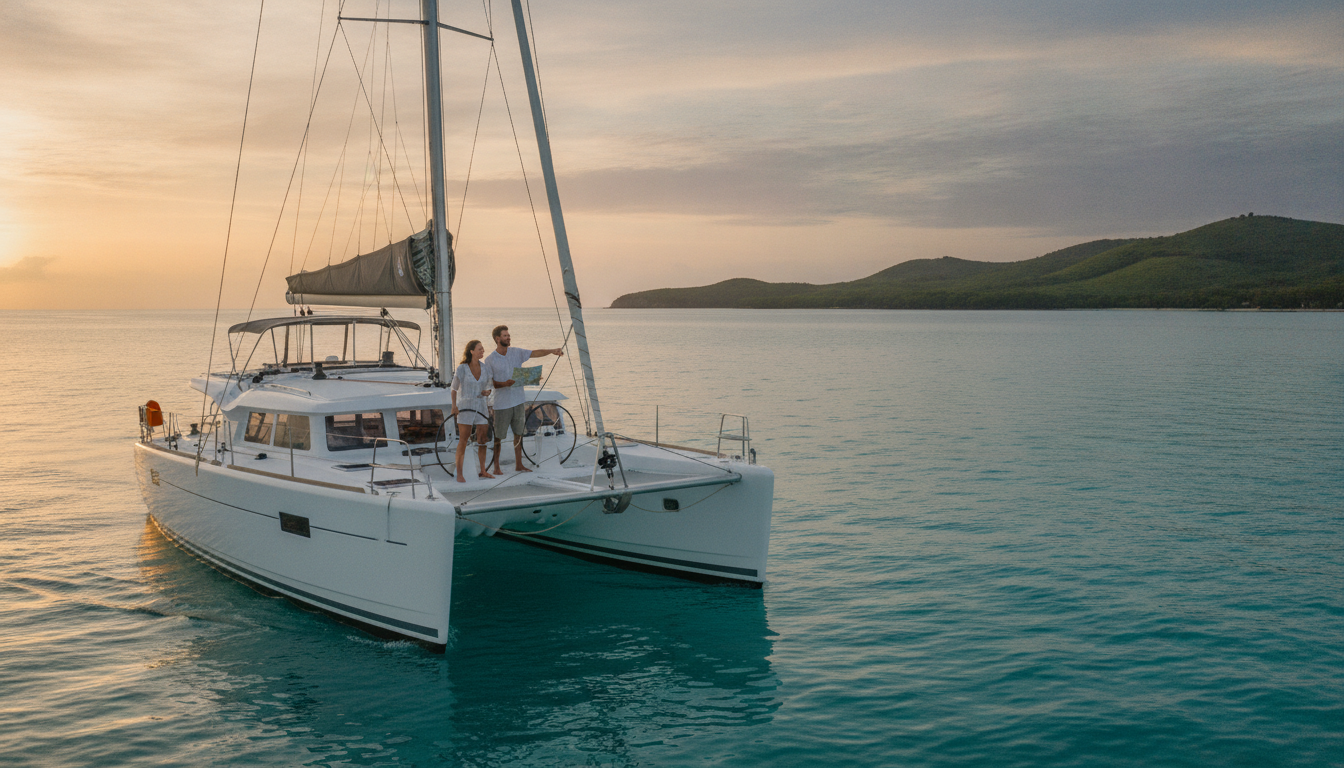
When selecting a vessel for a first-time charter, the choice usually boils down to a monohull or a catamaran. For beginners, the catamaran is almost always the superior choice. The dual-hull design provides exceptional stability, significantly reducing the likelihood of sea sickness—a common concern for those who haven’t spent much time on the water. Catamarans do not “heel” (tilt) like monohulls do when under sail, which makes moving around the deck and interior much safer and more comfortable for novices. Furthermore, catamarans typically offer more expansive living spaces, including a spacious bridge deck and larger cabins, providing a more “villa-like” experience on the water.
The Role of the Professional Skipper
The skipper is more than just a driver; they are your guide, instructor, and safety officer. For a beginner, the skipper acts as the ultimate insurance policy. They possess deep knowledge of local weather patterns, underwater hazards, and the best secluded anchorages that are not found in standard guidebooks. By hiring a professional, beginners can mitigate the risks associated with anchoring in crowded bays or navigating narrow channels. For those looking to explore the pristine waters of the Caribbean or the Mediterranean without prior experience, booking through a reputable agency like Salt-n-Sun Charter ensures that every logistical detail, from professional skippers to route planning, is handled with expert care.
Top Beginner-Friendly Destinations
Location is a critical factor in the success of a first-time sailing trip. Beginners should look for destinations with “line-of-sight” navigation, minimal tidal ranges, and predictable wind patterns.
- The British Virgin Islands (BVI): Often cited as the sailing capital of the world, the BVI offers calm waters, short distances between islands, and a massive infrastructure for charter guests.
- The Ionian Islands, Greece: Known for gentle afternoon breezes and a lack of strong currents, islands like Lefkas and Corfu are perfect for those new to the sea.
- The Dalmatian Coast, Croatia: With over a thousand islands, the Croatian coast provides plenty of protection from the open sea, ensuring flat water and easy mooring at modern marinas.
- The Exumas, Bahamas: While the water is shallow, the clarity and abundance of protected anchorages make it a paradise for beginners who enjoy snorkeling and beach hopping.
Essential Preparation for Your First Charter
Even if you aren’t handling the sails, preparation is key to a smooth experience. Beginners should focus on three main areas: packing, safety awareness, and physical preparation.
Packing for the Sea
Space on a yacht is limited. Beginners often over-pack. The most important items are soft-sided luggage (hard suitcases are difficult to store), non-marking deck shoes, high-SPF sun protection, and polarized sunglasses. It is also wise to pack a small dry bag for shore excursions to keep electronics and documents safe from splashes.
Managing Motion Sickness
Sea sickness is a primary fear for beginners. Modern medicine and technology have made this manageable. Transdermal patches or over-the-counter antihistamines are highly effective. Furthermore, staying on deck, looking at the horizon, and staying hydrated can prevent symptoms before they start. Choosing a stable catamaran also serves as a preventative measure.
Learning the Ropes: Educational Opportunities
Many beginners find that once they are on the water, they want to be more than just passengers. Many charters offer the opportunity to earn certifications while on vacation. Organizations like the American Sailing Association (ASA) or the Royal Yachting Association (RYA) have programs where an instructor stays on board with you for the week. By the end of the charter, you can achieve your initial certifications, moving you one step closer to one day being able to captain your own bareboat charter.
Safety and Security Onboard
Safety is the paramount concern for any maritime activity. Modern charter yachts are equipped with advanced safety gear, including Life Rafts, EPIRBs (Emergency Position Indicating Radio Beacons), and VHF radios with DSC functionality. Before the yacht leaves the dock, the skipper will conduct a safety briefing. For beginners, it is vital to pay close attention to the operation of life jackets, the location of fire extinguishers, and the “man overboard” protocols. Understanding how to use the marine head (toilet) correctly is also a critical, albeit less dramatic, safety and maintenance topic.
Frequently Asked Questions
Do I need a license to go on a sailing charter?
No, you do not need a license if you book a skippered or fully crewed charter. The professional captain provided by the charter company holds all the necessary commercial licenses and certifications required to operate the vessel.
Is sailing safe for children and seniors?
Absolutely. Sailing charters are a multi-generational activity. Catamarans, in particular, provide a stable platform that is safe for children and those with limited mobility. Netting can often be added to the lifelines for extra safety for small children.
What happens if the weather is bad?
Professional skippers monitor weather forecasts constantly. If conditions are unsafe for sailing, the skipper will adjust the itinerary to find a protected harbor or delay departure. Safety always takes precedence over the planned route.
How much does a sailing charter cost for a beginner?
Costs vary widely based on the size of the boat, the season, and the level of service. A skippered charter for a week can range from $3,000 to $10,000+, depending on whether you choose a monohull or a luxury catamaran. This cost is often comparable to a high-end resort stay when split among a group.
Will I have internet access while sailing?
Most modern charter yachts are equipped with Wi-Fi, often powered by cellular 4G/5G boosters or Starlink satellite systems. However, connectivity can be intermittent when sailing between remote islands or far from the coast.
Conclusion
The transition from a land-dweller to a sea-traveler is a profound experience that is now accessible to everyone. By choosing the right charter type, selecting a stable vessel like a catamaran, and relying on the expertise of professional skippers, beginners can bypass the years of training typically required for ocean navigation. Whether you are looking to learn the craft or simply want to wake up in a new turquoise bay every morning, the world of sailing charters offers an unparalleled sense of freedom. As the industry continues to evolve with better technology and more beginner-centric services, there has never been a better time to leave the shore behind and discover the magic of life under sail. Trust in the expertise of seasoned professionals and the structural integrity of modern vessels to turn your nautical dreams into a reality.


